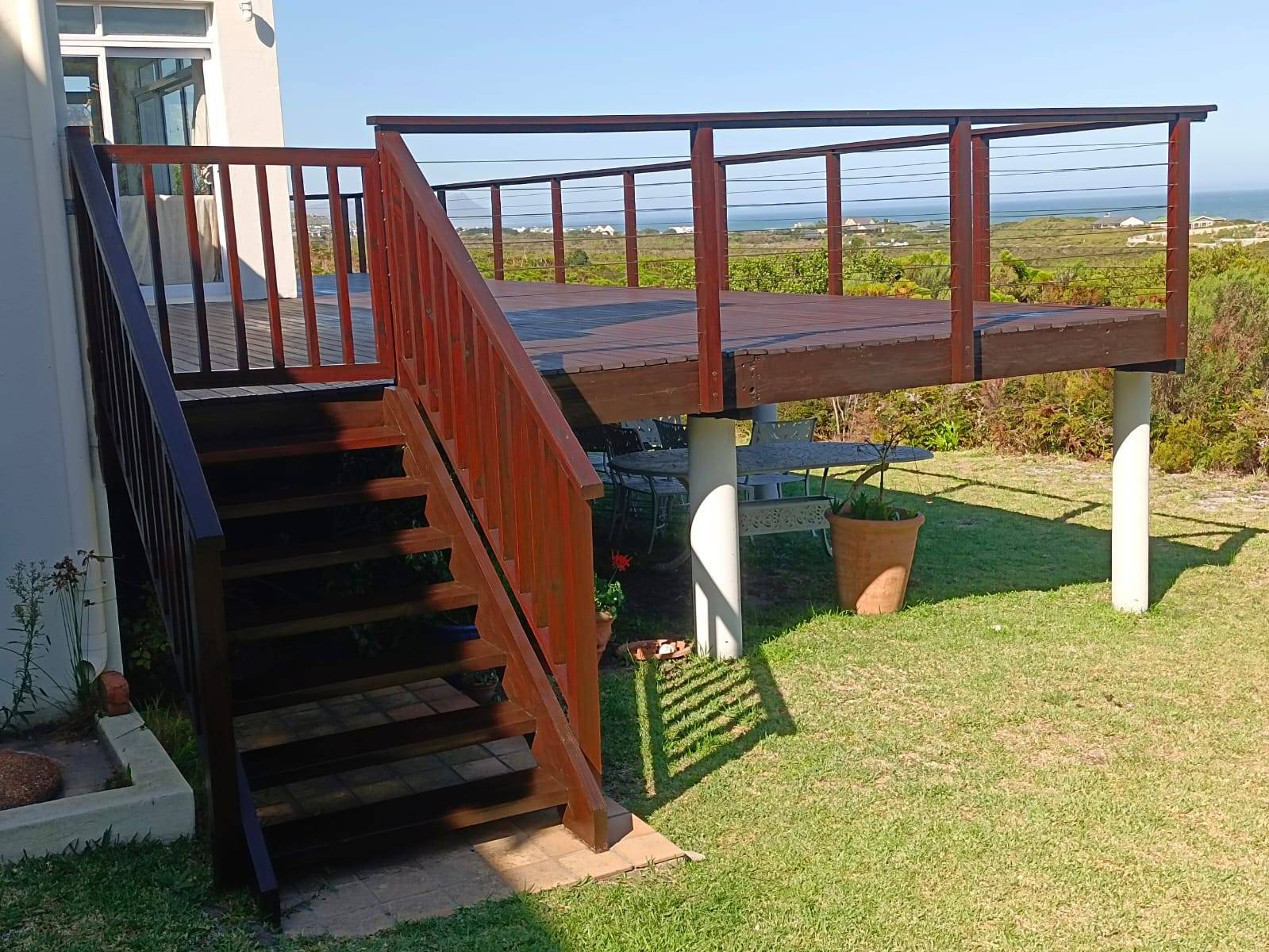
An outdoor staircase gets the kind of daily punishment a deck board never sees, every step loads and twists the treads, the stringers, and every joint holding them together. Add in the damp, salt air and the odd bare foot after a swim, and a staircase that isn't built with all of that in mind is usually the first thing on a property that starts to feel unsafe.
Rise and run has to feel right, not just meet a rule
There are standard guidelines for how tall each step should be and how deep the tread is, but the number that matters most is how it actually feels walking up in the dark with your hands full. A slightly too-tall rise or a tread that's too shallow doesn't just feel awkward, it's genuinely how people trip. I set this out on site before cutting anything, not off a plan drawn up without seeing the actual slope.
A slippery tread is the real hazard here, not the timber itself
Timber gets blamed for being slippery when it's usually the finish, or the lack of one, that's the actual problem. Out here, morning dew and salt spray keep treads damp for longer than people expect, so I either groove the tread surface or use a textured anti-slip strip on anything exposed, especially the first and last step where people aren't yet paying attention.
The connection to the deck is where it actually fails
A staircase that's just resting against the edge of a deck, held on by a few screws into the fascia board, is the most common failure I get called out to fix. The stringers need to be properly bolted into real structural framing, not just the decorative edge board, so the whole staircase moves as one unit with the deck instead of working itself loose over time.
Stainless fixings, same reasoning as everything else I build
Same as decking and fencing on this coast, a standard fixing corrodes fast in salt air, and a corroding fixing weakens the timber around it long before you'd notice from looking at it. Every staircase I build uses stainless steel bolts and screws throughout, it costs more upfront and it's the difference between a staircase that's still tight in five years and one that starts to creak in one.
If a staircase on your property is starting to feel a bit off underfoot, that's worth taking seriously rather than waiting on. Get in touch and I'll come take a look at what's actually going on.